
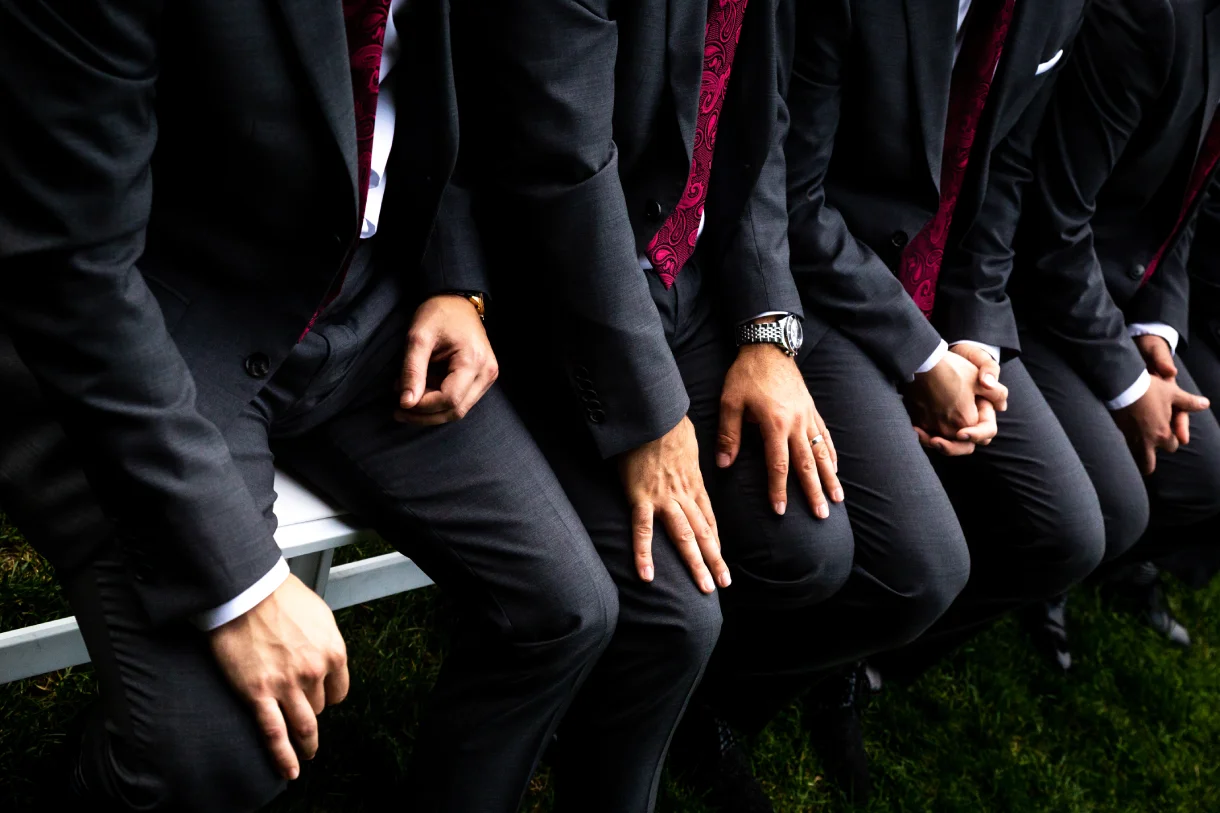
Groomsmen suits are easier to coordinate when the wedding party has enough time to choose a style, gather measurements, confirm accessories, and review the full fit before the wedding day. For most weddings, beginning the suit process about 4 to 6 months before the wedding creates a comfortable planning window.
The exact timing depends on how the suits are being handled. Rental suits, off-the-rack purchases, and custom suits each follow a different process. The number of groomsmen, their locations, the wedding season, and the amount of fitting work can also shape the schedule.
At Stych Inc. in Oxnard, wedding parties can explore different options based on the event, budget, group size, and preferred fit. Stych’s wedding and group services bring suit selection, coordination, and fitting into one organized process for the groom and his wedding party.
When Should Groomsmen Order Suits for a Wedding?
Groomsmen should usually start choosing suits about 4 to 6 months before the wedding, with measurements completed around 3 to 4 months before the event. This gives the group comfortable time for ordering, coordinating everyone’s sizes, planning accessories, and completing final alterations or try-ons closer to the wedding.
Larger wedding parties, destination weddings, custom suits, and groups with groomsmen living in different cities often benefit from starting closer to the six-month point. A smaller local group choosing ready-to-wear suits may have a simpler timeline.
Here is a practical planning guide:
|
Time Before Wedding |
What to Plan |
|
6+ months |
Decide on wedding formality, groom’s look, colors, and general suit direction |
|
4–6 months |
Choose the groomsmen suit style and decide between rental, off-the-rack, or custom |
|
3–4 months |
Collect measurements and confirm each groomsman’s order |
|
6–8 weeks |
Review shirts, shoes, ties, and other accessories |
|
2–4 weeks |
Complete applicable alterations and fit checks |
|
1–2 weeks |
Try on the full outfit and confirm every piece |
|
Wedding week |
Keep the complete outfit together and ready for the event |
This timeline is a planning guide rather than a fixed schedule. Fabric availability, suit type, group size, alterations, and the wedding date can all affect the process.
Choose the Groom’s Suit Before Ordering the Groomsmen’s Suits
The groom’s outfit usually gives the rest of the wedding party its direction.
Once his suit or tuxedo has been selected, it becomes easier to choose coordinating suits for the groomsmen. The group can then build around the groom’s color, formality, fabric, and overall style.
The groom and groomsmen can wear the same suit with different accessories. The groom might wear a different vest, tie, boutonniere, or pocket square. Another option is to give the groom his own suit while choosing a complementary color for the rest of the party.
For example, a groom in navy might choose medium gray suits for his groomsmen. A groom wearing a black tuxedo might coordinate the party in black suits. For a warm outdoor wedding, the groom and party may work with lighter neutrals.
Stych’s groom and groomsmen attire services can help wedding parties plan the full group around one clear style direction.
Choosing the groom’s look first also makes later decisions about shirts, ties, shoes, and pocket squares much easier.
Decide Whether the Groomsmen Will Rent or Buy
The right option depends on budget, fit preferences, and whether each groomsman wants to wear the suit again. Rentals work well for one event, off-the-rack suits can become part of a regular wardrobe, and custom or bespoke suits offer the most personal fit and design choices.
|
Suit Option |
Good Time to Start |
Best For |
After the Wedding |
Fit Planning |
|
Rental Suits |
3 to 4 months |
A coordinated look for one event |
Returned after the event |
Standard sizing and a full try-on before the wedding |
|
Off-the-Rack Suits |
3 to 5 months |
A versatile suit that can be worn again |
Kept for work and future events |
Alterations can refine the hem, waist, and sleeves |
|
Custom / Bespoke Suits |
4 to 6 months |
More personal fit and design choices |
Kept as a long-term wardrobe piece |
Measurements, fittings, and a final review are part of the process |
Rental Suits
Suit rentals can be a practical choice for a wedding party that wants a coordinated look for one event.
Starting the rental process several months ahead gives the group time to choose the style, collect sizing information, coordinate accessories, and plan pickup.
Stych offers suit and tuxedo rental options for customers looking for a straightforward event-wear solution.
For a wedding party, planning earlier also makes communication easier. Everyone knows which suit to wear, what accessories are included, and when each part of the process should happen.
Off-the-Rack Suits
Purchasing an off-the-rack suit gives each groomsman a garment he can continue wearing after the wedding.
This can work especially well with versatile colors such as navy, charcoal, gray, or black. After the wedding, the same suit may work for business events, dinners, interviews, graduations, and other formal occasions.
Wedding parties considering this route can review Stych’s off-the-rack men’s suits while planning the group look.
Starting a few months ahead gives each groomsman time to find the right size and complete any fit adjustments that help the suit sit cleanly through the jacket and trousers.
Custom or Bespoke Suits
A custom wedding suit involves more individual planning. Fabric, measurements, jacket style, trouser design, lining, buttons, lapels, and personal details may all become part of the process.
Because more choices are involved, starting earlier gives the wearer more time to enjoy those decisions and move comfortably through fittings and final adjustments.
For a groom or wedding party considering a more individualized garment, Stych also offers bespoke suit options.
For many weddings, beginning the custom-suit conversation around 4 to 6 months ahead is a useful planning point. The actual timeline should be confirmed when the garment and fabric are selected.
Understand the Difference Between Custom and Customized Suits
The word “custom” can describe several approaches to suiting, so it helps to understand exactly what the wedding party is ordering.
Some suits begin with an existing garment or established design that can be adjusted and personalized. Others involve a more individual process built around measurements, fabric, construction, and design choices.
The distinction can affect both timing and fitting.
A wedding party looking for more background can review Stych’s guide to customized vs. custom suits.
Knowing the suit type early gives the groom a clearer planning schedule for the full party.
Give Larger Wedding Parties More Planning Room
Coordinating three groomsmen is different from coordinating eight or ten.
As the wedding party grows, there are more measurements, schedules, accessory selections, and fitting appointments to organize. Starting earlier gives everyone more flexibility.
A useful approach is to set one group deadline rather than allowing each person to choose his own schedule.
For example, a groom with eight groomsmen might choose the suits five months before the wedding and ask everyone to complete measurements within the following four weeks. That creates a clear point when the entire party moves forward together.
The groom, best man, planner, or another trusted person can keep a simple record of:
- Each groomsman’s name and contact information
- Measurement status
- Suit size or order status
- Shirt and accessory selections
- Shoe plan
- Fitting status
- Pickup details
The purpose is simple organization. Everyone has the same information, and the group can move through each stage together.
Plan Early for Out-of-Town Groomsmen
Wedding parties often include friends and family living in different cities or states.
These groups benefit from choosing the suit style early because each groomsman may need time to provide measurements, coordinate travel, receive his suit, and complete a full try-on.
The important part is giving everyone clear instructions.
Once the suit has been chosen, each groomsman should know what measurements are needed, where to provide them, which accessories are part of the outfit, and when his fitting or pickup should be completed.
Stych also offers virtual group measuring sessions for out-of-town wedding parties. Groomsmen can provide professional measurements remotely, then plan an in-person try-on at the Oxnard showroom when they arrive in Ventura County, ideally 1 to 2 weeks before the wedding when the schedule allows.
If several people are traveling for the wedding, it also helps to choose one person to manage group communication. That keeps updates consistent and makes the process easier for the groom.
Get Measurements Early, Then Review the Fit Closer to the Wedding
Measurements are the starting point for a well-fitting suit.
Jacket size, chest, shoulders, sleeve length, waist, inseam, trouser length, and other measurements help establish the correct garment size. The exact measurements needed depend on the type of suit and how it is being ordered.
Stych provides additional guidance on knowing your suit measurements, which can be useful when the wedding party begins the sizing process.
Measurements taken a few months before the wedding establish a strong starting point. A later try-on then gives each groomsman a chance to see how the actual garment sits on his body.
During the fit review, pay attention to the full suit rather than one measurement at a time.
The jacket should sit cleanly through the shoulders and chest. The sleeves should work with the shirt cuff. The trousers should feel comfortable through the waist and seat and fall cleanly toward the shoes.
These details work together to create the finished look.
Leave Time for Groomsmen Alterations
Groomsmen alterations can make a meaningful difference, especially when the wedding party purchases off-the-rack suits.
A suit may already fit well through the shoulders while needing a trouser hem or a small waist adjustment. Another groomsman may benefit from jacket sleeve work or trouser tapering.
For purchased garments, planning alteration appointments around 2 to 4 weeks before the wedding can create a useful window for fitting, tailoring, pressing, and final review. More detailed work may benefit from additional time.
Common suit alterations can include:
- Pant hemming
- Trouser waist adjustment
- Seat adjustment
- Pant tapering
- Jacket sleeve adjustment
- Jacket waist shaping
The garment itself determines the amount of work involved. Fabric, lining, seams, jacket construction, and the number of areas being adjusted can all affect the process.
Stych provides professional tailoring and alterations for suits, trousers, jackets, and formalwear, making the fitting stage a natural part of wedding suit planning.
For rental garments, fit options can follow a different process, so the wedding party should confirm the available sizing and fit choices when selecting the rental.
Bring Wedding Shoes to the Final Fit Check
Shoes play an important role in trouser length.
A pair of dress shoes can change where the trousers fall and how much break appears at the front of the pant leg. Trying on the suit with the actual wedding shoes gives a clearer view of the finished proportion.
The same principle applies to the shirt.
A dress shirt helps show how much cuff appears below the jacket sleeve. It also helps the wearer check the collar, tie, and overall balance of the upper body.
By the final fitting, each groomsman should ideally try on the outfit as closely as possible to the way he will wear it at the wedding.
That means combining the jacket, trousers, shirt, shoes, tie or bow tie, and any vest or other planned accessories.
Coordinate Accessories Before the Final Try-On
The suits create the foundation of the wedding-party look. Accessories connect that foundation to the wedding colors and level of formality.
Ties, bow ties, pocket squares, belts, suspenders, shoes, and socks are easier to coordinate once the suit color has been confirmed.
For example, navy suits can work with a wide range of wedding colors. A soft sage tie can suit a spring garden wedding, while burgundy can give the same navy suit a warmer fall look.
Black suits paired with white shirts and black ties can create a clean formal appearance. Gray suits can work with muted blues, greens, burgundy, or neutral accessories depending on the event.
The key is consistency. Decide which pieces should match exactly and which pieces can vary.
The groom may use one accessory to distinguish his outfit while keeping the overall wedding party coordinated.
Schedule a Full Try-On Before the Wedding
A complete try-on is one of the most useful stages in the groomsmen suit timeline.
Around one to two weeks before the wedding, each groomsman can put on the full outfit and review how everything works together.
For weddings in Oxnard, Ventura County, Camarillo, Thousand Oaks, or nearby areas, this can also be a convenient time for traveling groomsmen to visit the Oxnard showroom. Bringing the wedding shirt and shoes helps the team review the full outfit together.
Check the jacket fit, sleeve length, shirt, trouser waist, pant length, shoes, tie, and accessories.
This is also a good time to confirm that each groomsman understands what he should bring on the wedding day.
Once the outfit has been reviewed as a complete look, the clothing can be kept together and ready for the event.
For destination weddings, this stage can happen before travel whenever the full outfit is available.
What If the Wedding Is Only a Few Weeks Away?
A shorter planning window can still offer several practical options.
Start by confirming the wedding date, number of groomsmen, preferred color, general size range, and level of formality. Then focus on suit choices that fit the available schedule.
Ready-to-wear suits and rental options can provide a more direct route than garments involving a longer production process.
Keeping the styling simple can also make group coordination easier. A classic navy, charcoal, gray, or black suit with a white shirt gives the party a strong foundation. Ties and pocket squares can then bring in the wedding colors.
An in-person visit is especially useful on a closer timeline because the group can review available garments, sizes, fit, and next steps in one conversation.
When Should the Groom Order His Suit?
The groom should usually begin first.
Starting around 5 to 6 months before the wedding gives him time to decide how formal the outfit should be, whether he wants to rent or purchase, and how his look will relate to the rest of the wedding party.
Once that decision is made, the groomsmen’s suits become much easier to choose.
A groom selecting a custom or bespoke suit may also want more time for fabric selection, measurements, design details, fittings, and final adjustments.
For an off-the-rack suit, the process may move more quickly while still leaving time for professional alterations and accessory planning.
A Simple Wedding Suit Planning Schedule
For many wedding parties, the process can look like this:
- About 6 months before:
Choose the groom’s general style, wedding formality, and suit direction. - About 4 to 5 months before:
Select the suits for the wedding party and confirm whether the group is renting, purchasing, or ordering custom garments. - About 3 months before:
Complete measurements and confirm each groomsman’s suit. - About 6 to 8 weeks before:
Finalize shirts, ties, shoes, pocket squares, and other accessories. - About 2 to 4 weeks before:
Complete applicable groomsmen alterations and review the fit. - About 1 to 2 weeks before:
Try on the complete wedding outfit.
Wedding week:
Keep every garment and accessory together so the full look is ready.
The exact schedule can move according to the wedding party, garment type, and service selected. Starting with a clear plan gives the group room to make thoughtful choices at each stage.
FAQs About When Groomsmen Should Order Suits
How far in advance should groomsmen order suits?
Starting the process about 4 to 6 months before the wedding gives most groups a comfortable planning window. The suits can usually be selected first, followed by measurements, accessories, fitting, and final review.
Is three months enough time for groomsmen suits?
Three months can provide a useful planning window for many wedding parties, especially when the suit style has already been chosen. The exact schedule depends on whether the suits are rentals, ready-to-wear purchases, or custom garments.
Should the groom order his suit before the groomsmen?
Yes. Choosing the groom’s suit first gives the wedding party a clear direction for color, formality, fabric, and accessories. The groomsmen can then wear the same suit or a coordinating style.
How early should groomsmen get measured?
Measurements are often useful around 2 to 3 months before the wedding, with the suit selection ideally completed beforehand. Groups using custom garments or coordinating several out-of-town groomsmen may choose to begin earlier.
When should groomsmen alterations be done?
For purchased suits, a fitting around 2 to 4 weeks before the wedding provides a practical window for common alterations and final review. The amount of tailoring needed and the garment construction can influence timing.
Should groomsmen buy or rent their wedding suits?
Both can work well. Rentals are useful for one-event wear and group coordination. Purchasing can make sense when the groomsmen want suits they can wear again. Custom and bespoke options provide more individual control over fit, fabric, and design.
Do groomsmen need a final fitting?
A final try-on is helpful because it allows each groomsman to see the jacket, trousers, shirt, shoes, and accessories together. Completing this around one to two weeks before the wedding gives the group a clear view of the finished look.
When should a large wedding party start ordering suits?
Larger groups often benefit from beginning around 5 to 6 months before the wedding. The additional time makes it easier to organize measurements, different schedules, out-of-town members, accessories, fittings, and group communication.
Plan Your Groom and Groomsmen Suits With Stych Inc.
The best time to order groomsmen suits depends on the type of suit, the size of the wedding party, and how much fitting and coordination the group needs. For many weddings, starting 4 to 6 months ahead creates a comfortable path from choosing the suits to the final try-on.
The groom can begin by deciding on his own look. From there, the wedding party can choose coordinating suits, complete measurements, plan accessories, and schedule any applicable alterations.
At Stych Inc. in Oxnard, grooms and wedding parties can explore rental, ready-to-wear, custom, and tailoring options based on their wedding plans. Starting the conversation early gives the team time to understand the event, review the group, and help build a polished look that feels right for the wedding day.