What Makes a Suit a Suit? Suits vs. Separates Explained
The STYCH Guide to Men’s Style | Part One
When shopping for men’s clothing, you’ve probably heard the terms two-piece suit, three-piece suit, suit separates, sport coat, and blazer. But what actually makes a suit a suit?
Is it the jacket? The trousers? The matching color? Or is it simply how everything looks together?
Understanding these differences can help you build a more versatile wardrobe, make informed purchases, and dress confidently for any occasion.
At STYCH, we believe great style begins with understanding what you’re wearing.
What Exactly Is a Suit?
A traditional suit consists of two essential garments: a tailored jacket and matching trousers.
The important distinction is that these garments are designed to be worn together, generally made from the same fabric, color, pattern, and finish.
A navy jacket paired with navy trousers doesn’t automatically create a suit. Even when the colors appear similar, differences in fabric texture, weave, and dye can make the pieces look mismatched.
A true matching suit begins with garments designed to complement each other as a coordinated set.
The Two-Piece Suit: The Foundation of Men’s Tailored Clothing
The two-piece suit is perhaps the most familiar style.
It consists of:
-
One matching suit jacket
-
One pair of matching trousers
That’s it!
The dress shirt, tie, shoes, and accessories complete the ensemble, but they are not counted as pieces of the suit itself.
A well-fitted two-piece suit is exceptionally versatile. Depending on its color, fabric, and styling, it can be appropriate for business meetings, weddings, interviews, celebrations, and countless other occasions.
The Three-Piece Suit: Adding Another Dimension
A three-piece suit includes the same matching jacket and trousers, with one additional garment: a vest, traditionally called a waistcoat.
The three components are:
-
Suit jacket
-
Matching trousers
-
Coordinating vest or waistcoat
The vest adds a distinctive layer of refinement and gives the wearer more styling options.
For example, removing the jacket during a wedding reception or business gathering still leaves a polished, coordinated appearance.
Three-piece suits are especially popular with individuals who appreciate classic tailoring and a more formal presentation.
What About Four-Piece and Five-Piece Suits?
You may have seen retailers advertise four-piece or even five-piece suits.
This is where terminology becomes especially important.
Traditionally, suits are described as two-piece or three-piece ensembles. However, some retailers market coordinated clothing packages as four-piece or five-piece suits by including additional garments or accessories.
These packages might contain a dress shirt, tie, or pocket square alongside the matching suit components.
The number of pieces advertised doesn’t necessarily indicate the quality or construction of the suit.
Always ask exactly what’s included.
A well-constructed two-piece suit can be a far better investment than a five-piece package made with inferior materials.
What Are Suit Separates?
Here’s where many shoppers become confused.
Suit separates are individual jackets and trousers sold independently rather than as one predetermined set.
They can be particularly beneficial for men whose jacket and trouser sizes don’t correspond to standard suit proportions.
For example, someone may require a larger jacket because of broad shoulders but prefer trousers with a smaller waist.
With matching suit separates, each garment can be selected in the appropriate size while still creating a coordinated suit.
Here’s the important distinction: Suit separates can absolutely create a traditional matching suit when the jacket and trousers come from the same coordinated fabric collection.
The term separates describes how the garments are selected and sold, not necessarily how they’re worn.
When Separates Become a Different Look
Not all jackets and trousers are intended to match.
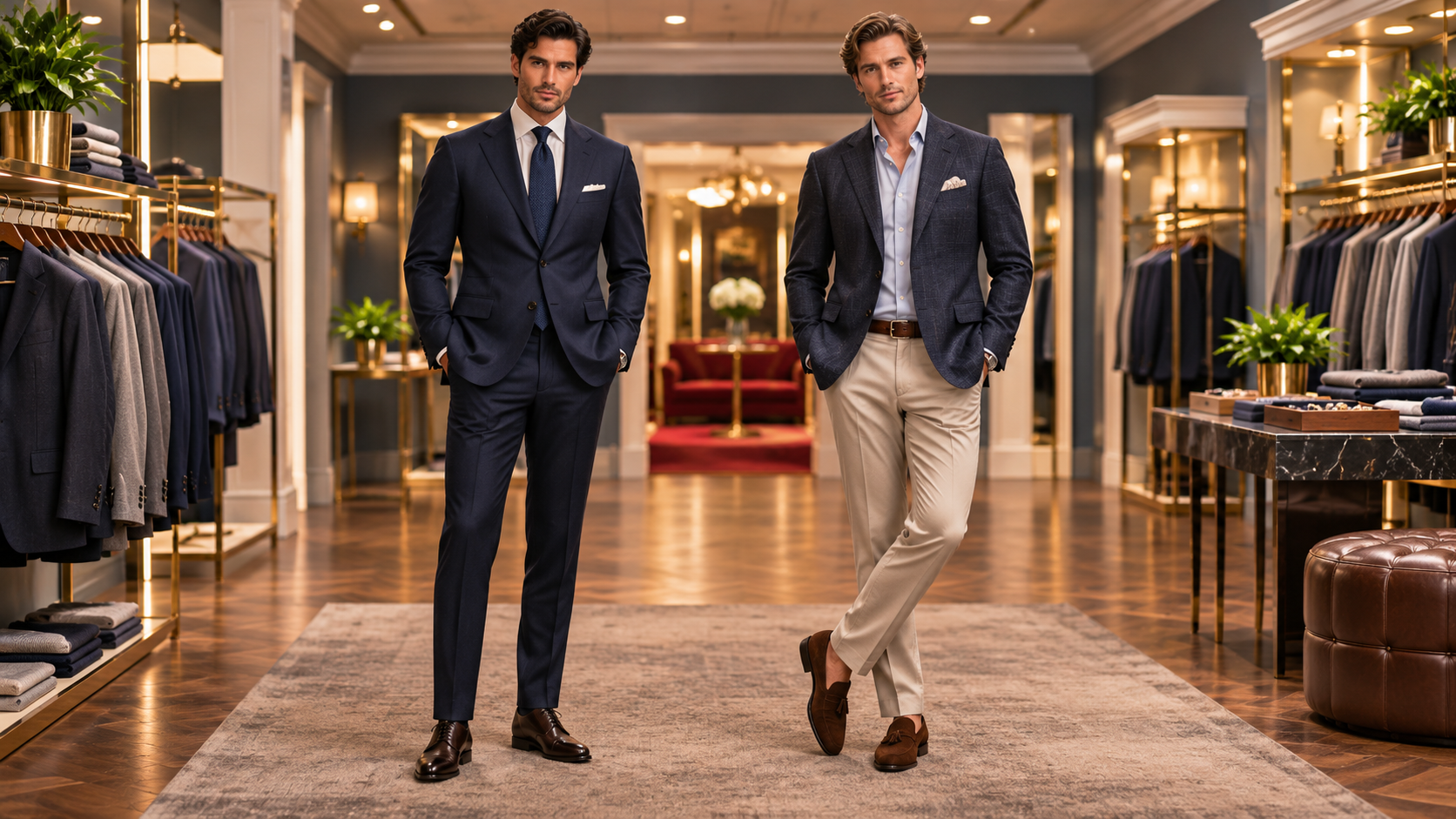
Pairing a navy blazer with gray dress trousers, for example, creates a sophisticated coordinated outfit, but it isn’t traditionally considered a matching two-piece suit.
Likewise, combining a patterned sport coat with solid-colored trousers offers a more relaxed approach to tailored dressing.
These combinations can be excellent choices for business casual environments, dinners, social gatherings, and occasions where a full matching suit isn’t necessary.
Knowing the difference gives you greater flexibility when building your wardrobe.
Which Should You Choose: A Suit or Separates?
The answer depends on your needs, lifestyle, and the occasions for which you’re dressing.
A matching suit creates a unified appearance and is often the preferred choice for formal business settings, weddings, important celebrations, and professional occasions.
Coordinated separates offer flexibility, allowing you to combine different garments, colors, and textures while creating multiple outfits from fewer pieces.
And matching suit separates provide an additional advantage: the ability to purchase jacket and trouser sizes independently without sacrificing a traditional suit appearance.
Neither choice is inherently better.
The best wardrobe is one that works for your body, your lifestyle, and your individual sense of style.
The Final Ingredient: Proper Fit
Regardless of whether you choose a matching suit or coordinated separates, proper fit is essential.
A beautifully designed garment can lose its appeal when the shoulders sit incorrectly, the sleeves are too long, or the trousers don’t complement the wearer’s proportions.
Conversely, a carefully selected garment with professional alterations can create an exceptionally polished appearance.
This is why knowledgeable fitting assistance and expert tailoring are so valuable.
At STYCH, we believe customers should understand their clothing choices before making a purchase.
Whether you’re selecting your first suit, expanding your professional wardrobe, or looking for something special, understanding the fundamentals helps you make decisions you’ll appreciate long after leaving the store.
The Perfect Fit for Life
At STYCH, menswear is about more than simply purchasing clothing.
Our team helps customers explore traditional suits, coordinated separates, bespoke clothing, suit and tuxedo rentals, wardrobe styling, and professional alterations.
We also provide alterations for garments purchased elsewhere, because an excellent fit shouldn’t depend on where your clothing was originally purchased.
Whether you’re dressing for business, a wedding, a special celebration, or everyday confidence, we’re here to help you make the right impression.
Visit STYCH at Shopping at the Rose, 2051 N. Rose Avenue, Suite 180, Oxnard, California — proudly serving Ventura County and beyond.
STYCH — The Perfect Fit for Life.
Coming Next in The STYCH Guide to Men’s Style:
Suit vs. Tuxedo: What’s the Difference, and When Should You Wear Each?